Why Pollachi Is Home to the Best Coconut Dealers in India

Pollachi’s name quietly carries a reputation that matters to anyone in the coconut business: fertile lands, expert growers, efficient markets and traders who understand quality. If you’re wondering why so many leading coconut dealers — packers, exporters and processors — source from Pollachi, this guide breaks it down: geography and climate, agricultural know-how, logistics and market structure, quality control practices, and the value-chain ecosystem that together make Pollachi exceptional.

Introduction

Coconuts are more than a crop in South India — they’re a livelihood and an industry. While many regions grow coconuts, Pollachi (Coimbatore district, Tamil Nadu) stands out. Dealers and buyers across India and overseas prefer Pollachi coconuts for consistent quality, reliable supply and farmer expertise. Below are the practical reasons behind that preference.

1. Ideal geography and microclimate

Pollachi is located in the western plains below the Western Ghats. This position gives it several advantages for coconut cultivation:
  • Tropical, well-distributed rainfall — the region receives adequate monsoon rains and often supplemental irrigation, supporting healthy coconut palms with good water balance.
  • Moderate temperatures — warm days and cooler nights reduce heat stress on palms and improve nut development.
  • Well-draining, fertile soils — the alluvial and loamy soils found around Pollachi help roots thrive and reduce risks of waterlogging or disease.
Together these factors produce coconuts with consistent size, shell thickness and desirable kernel characteristics (good copra quality and oil content), traits buyers look for.

2. Longstanding farmers’ expertise & traditional knowledge

Pollachi isn’t an “instant” production center. Many growers here work with coconuts generation after generation. That local knowledge shows up as:
  • Right spacing and intercrop practices — many farmers interplant coconuts with banana, turmeric, vegetables and other crops, improving soil health and steady cash flow.
  • Seasonal pruning, manuring and pest management — experienced growers know when to fertilize and how to manage common pests and diseases with minimal yield impact.
  • Timely nut harvesting and grading — local harvest practices ensure nuts are harvested at optimum maturity for the intended use (fresh coconut, copra, or chips).
This experience results in a predictable, quality-focused supply — a huge advantage for dealers who need uniform lots.

3. Varieties and product versatility

Pollachi farmers cultivate coconuts suitable for a range of end uses: fresh consumption, copra (dried kernel), oil extraction, desiccated coconut, and coir products. This versatility is appealing to dealers because they can source a single origin for multiple product lines, simplifying procurement and maintaining traceability.

4. Strong market infrastructure & aggregation networks

Pollachi benefits from established aggregation systems:
  • Local collection centers and traders consolidate small-holder output into commercial lots. That reduces transaction costs and smooths supply fluctuations.
  • Competitive local market — active local trade and competitive pricing help dealers access bulk quantities without long delays.
  • •Prevalent private suppliers and exporters — many medium-sized processors and exporters operate near Pollachi, enabling quick packing and quality checks before shipment.
For dealers, this infrastructure means faster turnaround times and lower risk in procurement.

5. Proximity to logistics & export gateways

Strategically, Pollachi’s location is a logistics advantage:
  • It’s relatively close to major transport hubs and highways leading to Coimbatore, Kochi and Chennai — easing movement to export ports and processing centers.
  • Reliable road connectivity allows quick transfer from farm to packhouse, minimizing time that fresh coconuts spend in transit (important for preserving quality if meant for fresh markets or high-quality copra).
Quicker logistics reduces spoilage, improves shelf-life and helps exporters meet tight delivery schedules — reasons many dealers prefer sourcing here.

6. Local processing & quality-control capabilities

Many dealers choose Pollachi because they can add value close to the source:
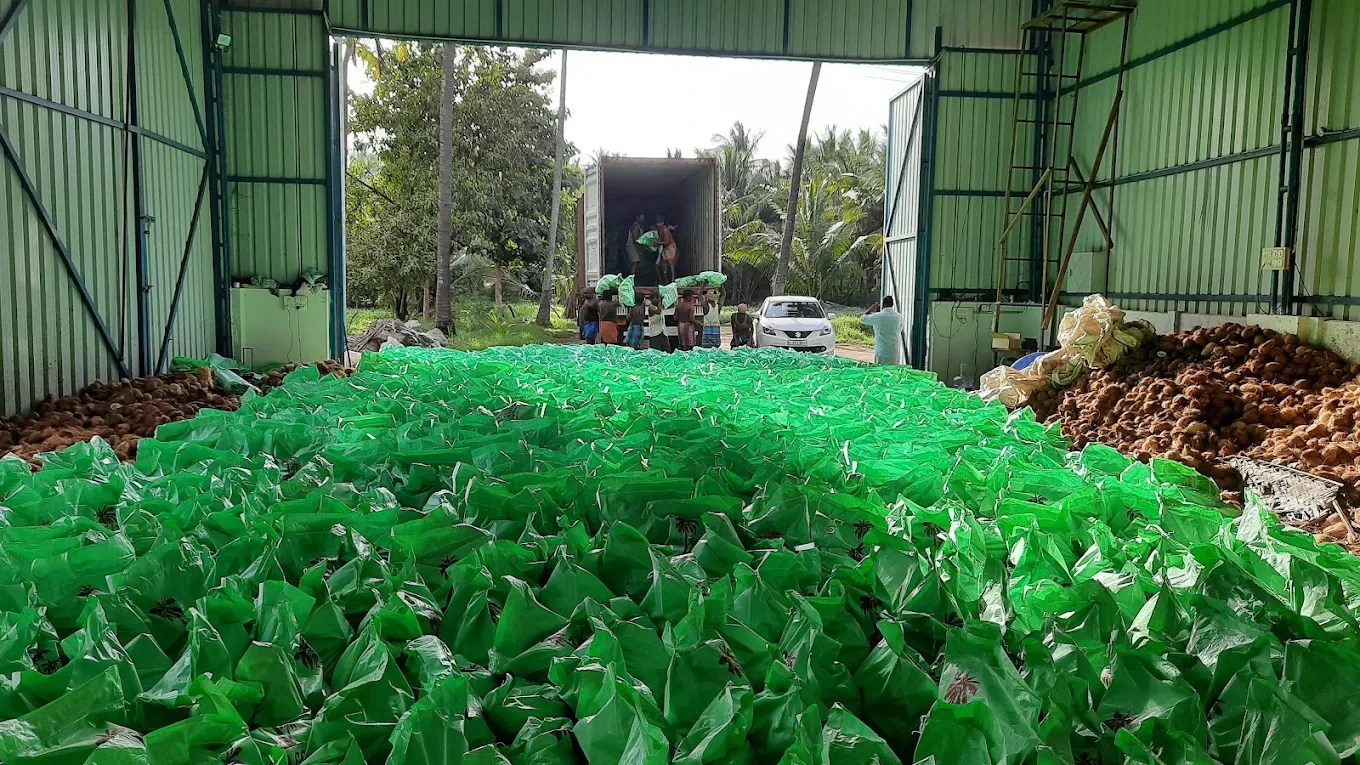
  • Small to medium packhouses and copra dryers: These facilities enable initial processing and standardization.
  • Quality-conscious traders: Local traders and processors are used to grading by kernel quality, moisture content and size — ensuring buyers receive consistent lots.
  • Traceability options: With aggregation hubs and established relationships, dealers can often trace lots back to villages or cooperatives — useful for quality audits and buyer transparency.
This on-the-ground capability reduces the likelihood of variable lots reaching customers.

7. Entrepreneurial ecosystem & buyer relationships

Pollachi has a practical commercial ecosystem: dealers, processors, transporters and ancillary services (weighbridges, packaging suppliers, testing labs) are all within reach. Long-term relationships between farmers, aggregators and exporters mean sellers are frequently responsive to buyer specifications (e.g., maturity of nut, drying standards, packing requirements). For dealers, these relationships translate into reliability.

8. Competitive pricing and flexible lot sizes

Because Pollachi aggregates supply from many smallholders, dealers can often negotiate across a range of lot sizes and price points — useful for customers who want both small test shipments and large repeat orders. That flexibility makes Pollachi attractive for both new buyers and established importers.

9. Challenges — and why they don’t outweigh the benefits

No region is perfect. Pollachi faces the same challenges other agricultural hubs do: variable monsoon years, labor constraints, and occasional pest pressure. But the area’s strengths — farmer expertise, processing infrastructure and logistics — tend to mitigate these issues quickly. Dealers who build direct ties with collection centers and packhouses can further reduce supply risk.

10. Opportunities for dealers and exporters

Pollachi’s ecosystem offers several growth avenues:
  • Direct sourcing partnerships with farmer groups to secure traceable, high-quality lots.
  • Investing in local value-add (copra drying, grading, hygienic packing) to improve margins and maintain export standards.
  • Sustainability and certification — working with farmers on good agricultural practices (GAP) and traceability can open premium export markets.

You can also read our detailed guides on Medium : Why International Buyers Prefer Pollachi for Coconut Exports

Conclusion

Pollachi isn’t simply a coconut-growing area — it’s a full-stack procurement advantage for dealers. The combination of ideal agro-climatic conditions, an experienced farming community, efficient aggregation and processing, and good logistics make Pollachi a dependable and high-quality source of coconuts. For exporters and dealers seeking consistent quality, flexible lot sizes and a ready value-chain, Pollachi often represents the most practical and commercially sound choice in India.
If you’re looking for a reliable coconut exporters in Pollachi, Tamil Nadu, explore our offerings and certifications on the homepage and get in touch with us today.
India’s Most Reliable Coconut Supplier – Aura Coconut

When it comes to coconuts, India has always been at the heart of global demand. From the lush green fields of Kerala and Tamil Nadu to kitchens and industries worldwide, coconuts are a vital part of trade, health, and tradition. But in a market where quality and trust matter the most, one name stands out – Aura Coconut, India’s most reliable coconut supplier.

Why Aura Coconut?

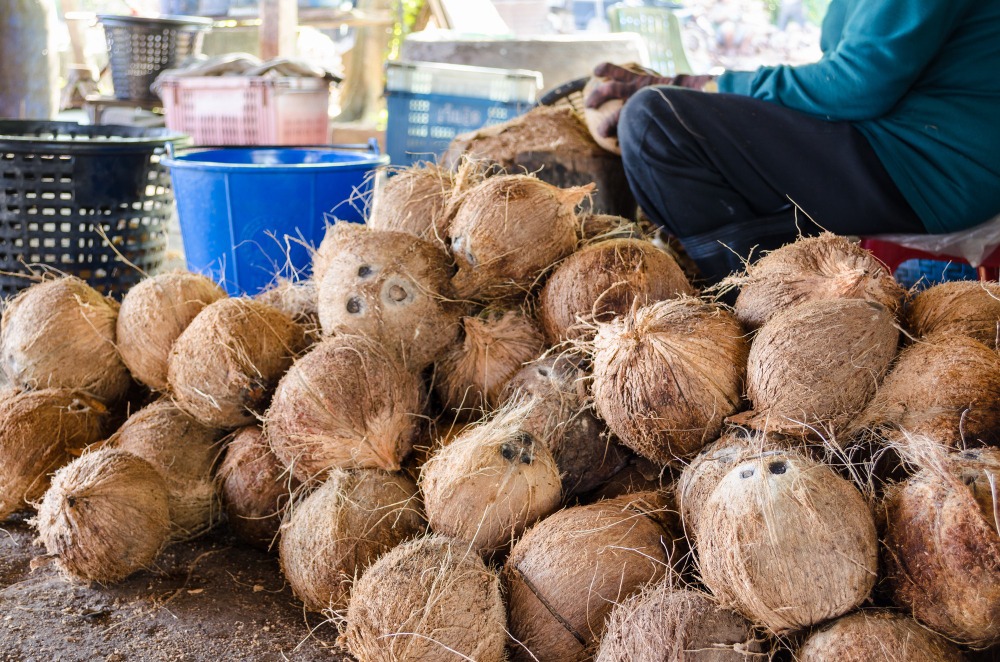
At Aura Coconut, we believe reliability starts from the roots. Every coconut we source comes directly from trusted farmers, ensuring freshness, quality, and consistency. Our team carefully grades, processes, and packs coconuts to meet international export standards, making sure our customers receive nothing but the best.

Quality That Speaks for Itself

Coconuts are more than just a commodity – they are a promise of purity. Whether it’s tender coconuts, semi-husked coconuts, or dry coconuts, Aura Coconut ensures:
•Strict quality checks at every stage
•Hygienic and safe packaging
•Timely delivery across global destinations
This commitment makes us the go-to partner for buyers who value both quality and reliability.
To learn more, read our detailed guide on benefits of sourcing coconuts from pollachi suppliers
Global Reach, Local Roots
While Aura Coconut serves clients across the world, our foundation remains with the farmers of India. By maintaining strong farmer relationships, we guarantee fair practices and sustainable sourcing. This not only benefits our customers but also uplifts the communities that nurture these coconuts.

Why Customers Trust Aura Coconut

•Consistent supply of premium coconuts
•Transparent and professional service
•Export-ready packaging to suit different markets
•Years of experience in coconut sourcing and trade

Conclusion

In today’s competitive global market, finding a supplier who delivers on promises is rare. Aura Coconut bridges tradition and trust with modern trade standards. That’s why we are proud to be recognized as India’s most reliable coconut supplier – bringing the goodness of coconuts from Indian farms to the world.
Ready to partner with a reliable coconut exporter and supplier from Pollachi, Tamil Nadu? Visit our homepage to get in touch and explore product options.
Choose Aura Coconut. Choose reliability, quality, and trust.

From Pollachi to the World: The Story Behind Aura Coconut

Every coconut carries with it a legacy of land, tradition, and care. At Aura Coconut, our journey begins in Pollachi, Tamil Nadu—a place  known across India as the coconut capital for its fertile soil, ideal climate, and decades of coconut farming excellence. As a trusted coconut exporter in Pollachi, we bring this legacy directly to global markets.

Why Pollachi?

Nestled at the foothills of the Western Ghats, Pollachi is not just a location—it’s a symbol of quality. With its rich soil and natural irrigation, coconuts from this region are:

. Naturally larger in size

. Packed with sweet water

. Rich in oil content

. Long-lasting and export-friendly

Our deep-rooted relationship with local farmers in Pollachi allows us to maintain consistent supply, superior quality, and complete transparency in every shipment.

Read more about Semi Husked Coconuts Export from Pollachi – Aura Coconuts


The Birth of Aura Coconut

Aura Coconut was started with a vision:

To bring India’s finest coconuts to global markets—with professionalism and integrity.

We realised that international buyers were often struggling with:

. Poor packaging

. Delayed delivery

. No quality control

So, we built a system that focuses on:

. Ethical sourcing

. Grading and sorting

. Customised export packing

. Real-time customer support

What Makes Aura Coconut Stand Out?

 • Direct from Pollachi Farms

   We work closely with trusted farmers to handpick the best coconuts at the right stage of maturity.

  • Graded & Packed for Export

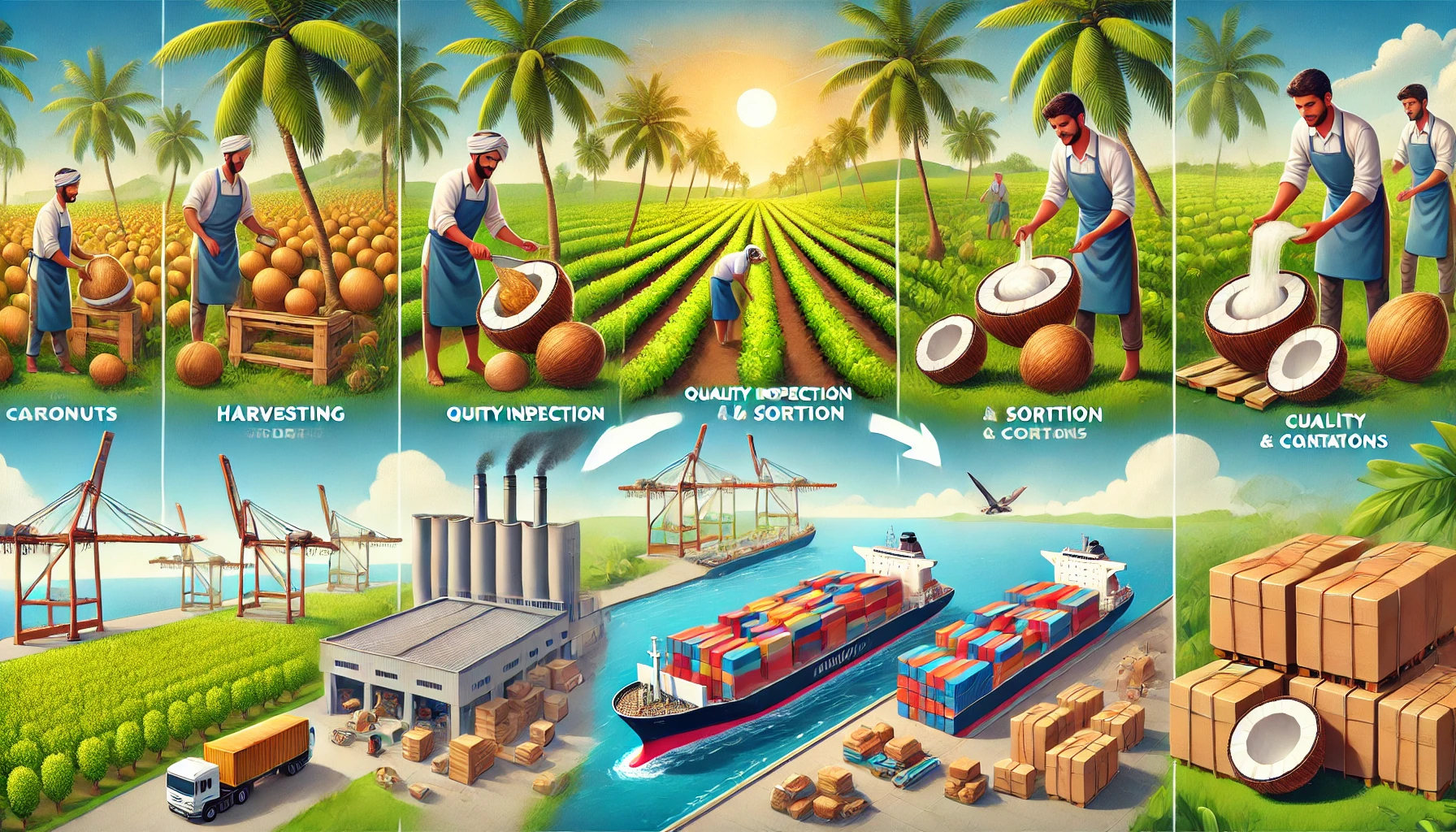
  Every batch is sorted for weight, size, shell condition, and water retention, then packed in hygienic, damage-proof packaging.

 • Tailored for Your Market

   Whether you need fully husked or semi-husked, we deliver as per your country’s standards and buyer needs.

 • Supporting Farmers

    We’re proud to create fair trade opportunities and ensure our farmers are paid well for their premium produce.

From Pollachi to ports across Europe and the Middle East,Aura Coconut is building bridges between Indian farmers and international businesses. And we’re just getting started.


Let’s Work Together

Whether you’re a wholesaler, distributor, or startup importing coconuts—we’re ready to be your trusted partner.

Website : auracoconut.in

WhatsApp : 92880 07419

Instagram : aura_coconut

Contact Number : ‪+91 928 800 7419‬, +91 984 716 7901‬ , 91 741 896 2838

Which are countries that can be coconut exporters

Several countries are major exporters of coconuts and coconut-based products. The leading coconut-exporting nations include:

Top Coconut Exporting Countries

  1. Philippines 🇵🇭 – The world’s largest exporter of coconuts, known for coconut oil, desiccated coconut, and copra.
  2. Indonesia 🇮🇩 – A major producer of fresh coconuts, coconut oil, and coconut-based products.
  3. India 🇮🇳 – A top exporter of fresh, tender, coconut oil, and coir products.
  4. Sri Lanka 🇱🇰 – Specializes in desiccated coconut, coconut oil, and coconut fibre.
  5. Vietnam 🇻🇳 – Growing exports in fresh coconuts, coconut water, and coconut-based snacks.
  6. Thailand 🇹🇭 – Famous for tender coconuts, coconut milk, and coconut water exports.
  7. Brazil 🇧🇷 – A key exporter of fresh coconut water, particularly to the U.S. and Europe.
  8. Mexico 🇲🇽 – Exporting mainly to the United States, focusing on fresh and processed coconut products.
  9. Malaysia 🇲🇾 – Known for coconut-based products such as coconut milk and virgin coconut oil.
  10. Papua New Guinea 🇵🇬 – A growing exporter of coconut products, especially copra and coconut oil.

Key Export Markets for Coconuts

  • USA & Canada – High demand for fresh coconuts, coconut oil, and coconut water.
  • European Union (Germany, Netherlands, UK, France) – Popular for organic and high-quality coconut products.
  • Middle East (UAE, Saudi Arabia, Qatar, Bahrain) – Demand for fresh coconuts and coconut-based drinks.
  • China & Japan – Strong market for coconut water, coconut milk, and coconut snacks.
  • Australia & New Zealand – Growing interest in organic and health-focused coconut products.


While major countries like the Philippines, Indonesia, and India rank among the top coconut exporters in the world, companies like leading coconut exporters from Pollachi play a key role in supplying high-quality coconuts to international markets.

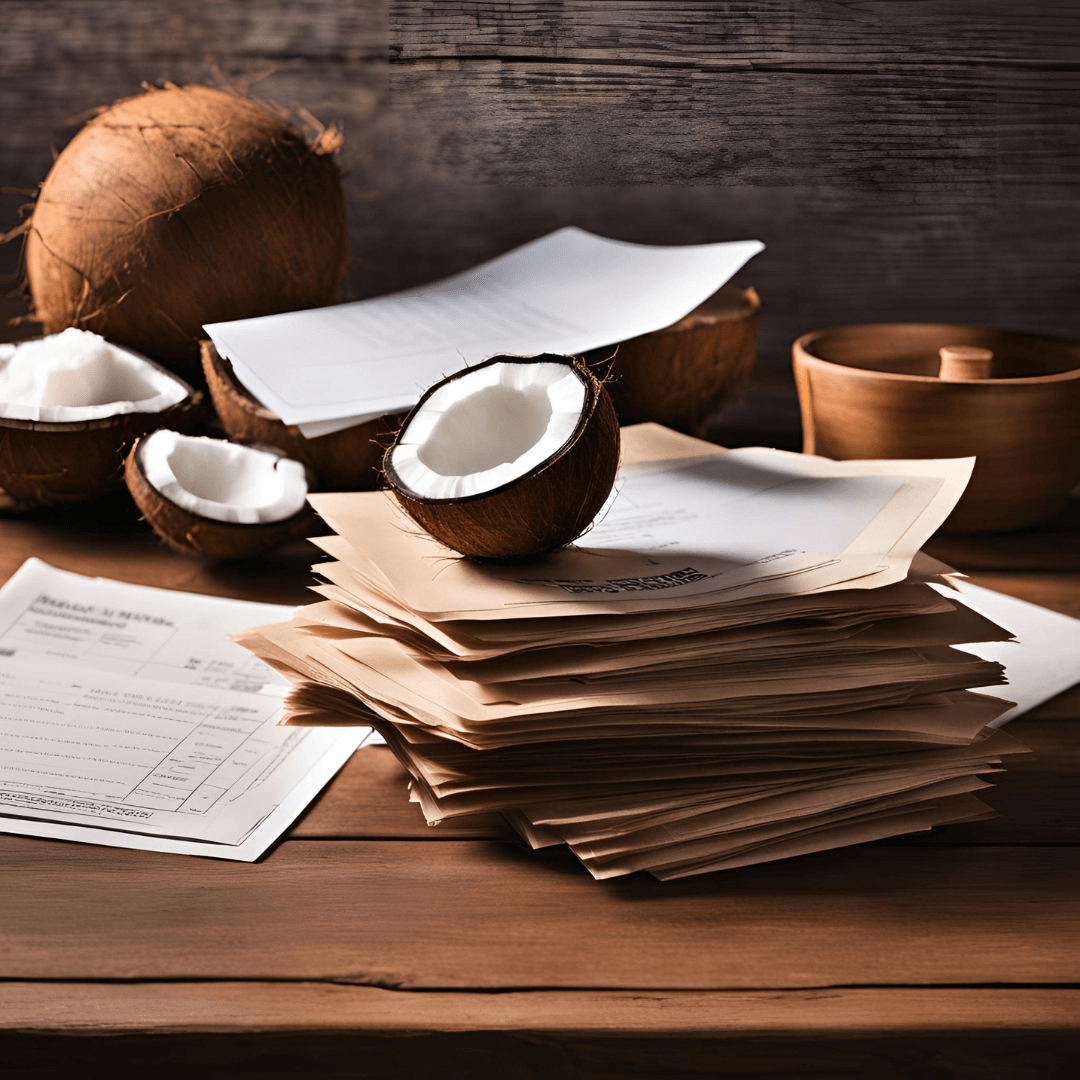
What are a document required to export coconut from India

Exporting coconuts from India requires various documents for compliance with Indian export regulations and the importing country’s requirements. Here is a list of essential documents:

1. Business & Export Registration Documents

  • Import Export Code (IEC) – Mandatory for all exports, issued by DGFT.
  • GST Registration Certificate – Required for tax compliance.
  • APEDA Registration – If exporting under APEDA guidelines.
  • FSSAI License – Needed for exporting edible coconut products.

2. Shipping & Logistics Documents

  • Bill of Lading (B/L) / Airway Bill – Proof of shipment issued by the shipping or airline company.
  • Packing List – Details about the quantity, weight, and type of packaging.
  • Commercial Invoice – A detailed bill mentioning product description, quantity, price, and terms of sale.
  • Certificate of Origin – Issued by the Chamber of Commerce, verifying that the product is of Indian origin.
  • Insurance Certificate – If the consignment is insured, this protects against damages.

3. Quality & Compliance Certificates

  • Phytosanitary Certificate – Issued by the Plant Quarantine Department, certifying that the shipment is pest-free.
  • Health Certificate – If required by the importing country, verifying that the coconuts meet health and safety standards.
  • Organic Certification (if applicable) – If exporting organic coconuts, certification from an accredited body is needed.
  • Lab Test Report (if required) – Some buyers or countries may require a test report on quality parameters.

4. Customs & Regulatory Documents

  • Shipping Bill – Issued by the Indian Customs Department for export clearance.
  • Export Declaration Form (EDF) – Required for regulatory compliance with the Reserve Bank of India (RBI).
  • Letter of Credit (LC) or Bank Payment Receipt – If using an LC, this document ensures safe payment transactions.
  • Proforma Invoice – Provided to the buyer before shipment, detailing the terms and costs.


How to Export Coconut From India

Exporting coconuts from India involves several steps — from business registration and licensing to finding international buyers and managing logistics — which is why partnering with a reliable coconut supplier in Pollachi or an experienced wholesale dealer in Pollachi can simplify the process and ensure compliance with global standards. Here’s a step-by-step guide:

Step 1: Register Your Business

  1. Business Registration – Register your company as a Sole Proprietorship, Partnership, LLP, or Private Limited Company.
  2. GST Registration – Obtain a GST registration certificate.
  3. Import Export Code (IEC) – Apply for an IEC from the Directorate General of Foreign Trade (DGFT). This is mandatory for exports.

Step 2: Get Necessary Certifications & Licenses

  1. APEDA Registration – Register with the Agricultural and Processed Food Products Export Development Authority (APEDA).
  2. FSSAI Certification – If exporting edible coconuts or coconut-based food products, get an FSSAI license.
  3. Phytosanitary Certificate – Issued by the Plant Quarantine Department, required for agricultural exports.

Step 3: Identify International Buyers

  1. Market Research – Identify demand in countries like UAE, USA, Europe, and Southeast Asia.
  2. Online B2B Platforms – List your products on platforms like Alibaba, IndiaMART, TradeIndia, and Export Genius.
  3. Export Promotion Councils – Join Coconut Development Board (CDB) and APEDA to connect with buyers.

Step 4: Product Sourcing & Packaging

  1. Quality Check – Ensure coconuts meet export quality standards.
  2. Packaging & Labeling – Use durable packaging and label as per the importing country’s requirements.

Step 5: Shipping & Logistics

  1. Choose a Freight Forwarder – Hire a freight forwarding company for documentation and logistics.
  2. Select the Shipping Method – Decide between air freight (for quick delivery) or sea freight (for bulk orders).
  3. Customs Clearance – Submit documents like Bill of Lading, Commercial Invoice, Packing List, and Phytosanitary Certificate for customs approval.

Step 6: Payment & Compliance

  1. Choose a Payment Method – Options include Letter of Credit (LC), Advance Payment, or Bank Transfer.
  2. Comply with Importing Country Regulations – Check for additional certifications or import restrictions in the destination country.